
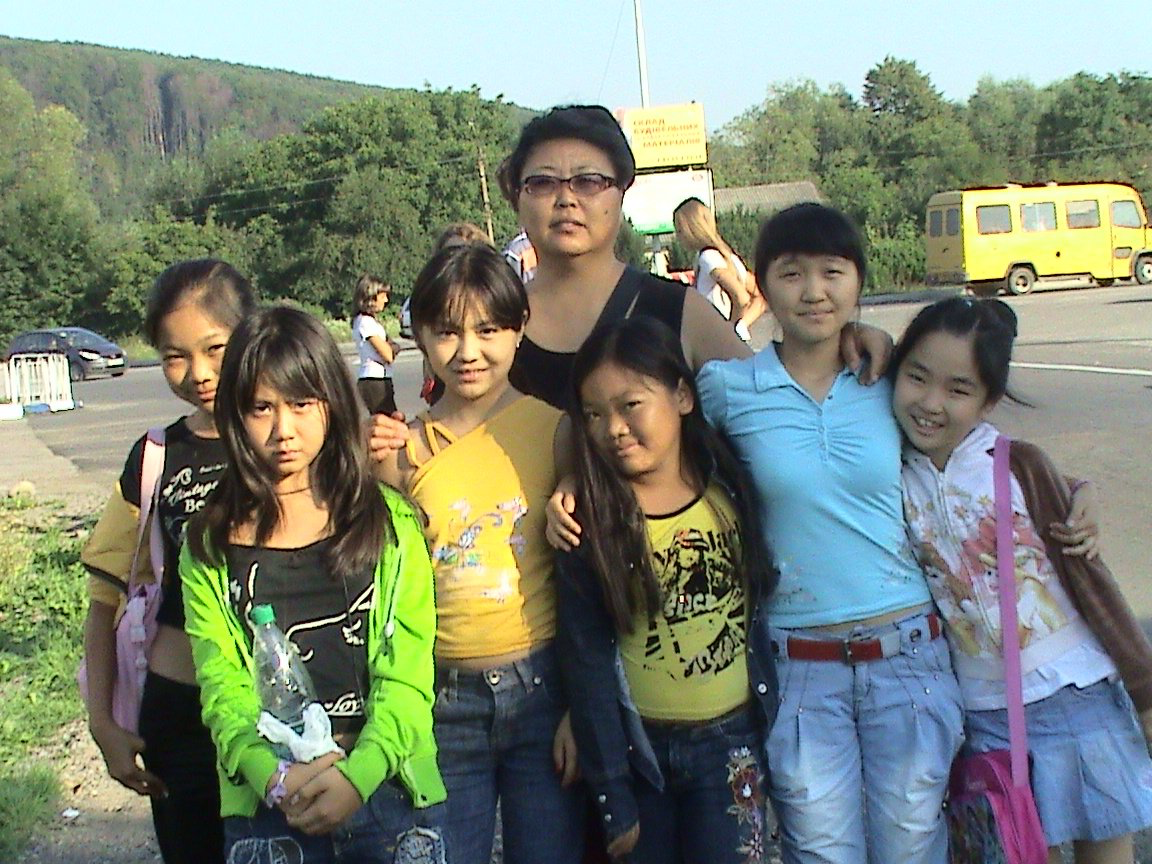
Photo Credit Author (right side) in referenced dance troupe
In May 2025, the day before my closed-book Property exam, I woke up to a headline announcing that airstrikes had hit my childhood neighborhood in Kyiv, Ukraine. Law school, it seems, has its own brand of terrible timing. This past Friday, I woke up to finish what was left of my Con Law Two: Equal Protection paper—due at 5 p.m. that day—only to learn that many more residential areas in Kyiv had been bombed. The Russian attack on the capital on November 14, 2025, killed seven people and injured thirty-six, causing damage across nine districts of the city. I am intimately familiar with the districts that were bombed. I lived in the Obolonskyi district, went to school in the Podilskyi district, and attended church in the Holosiivskyi district.
It is difficult to put into words what the events of the past eleven years have evoked in me. Although I have not woken up at midnight to the terror of my own home crashing down on me, I cannot pretend that Russia’s invasion has left my family and I unscarred. My family fled to their home country of South Korea under orders from the Korean government a week before the invasion. Two weeks after Russia’s full-scale invasion of Ukraine, my mother called me, sobbing, in the middle of the night. She had a dream that she was back in Ukraine, and I was a baby, and she had lost me in the middle of the chaos of war.
Although I was safe in the U.S., barely missing the Russian invasion by only a month, her dream was not far off: Russia has abducted at least 19,500 Ukrainian children from Ukraine, and some estimates put the number as high as 200,000. Many of these Ukrainian children are indoctrinated as soldiers for the Kremlin.
My least favorite summer as a child was spent at Artek, an internationally acclaimed summer camp in Crimea founded during the Soviet Union for the best and brightest of the Young Pioneers. As an American child pampered by modern comforts, I was horrified to see that my dorm in this esteemed camp had no shower curtains, no hot water, no air conditioner, and was a thirty-minute, mountainous walk to the nearest cafeteria. Although I had been invited as part of a Korean traditional dance troupe to perform throughout the summer, I called my parents a week in and my father took the train to Crimea to take me back home.
Unlike myself, many Ukrainian children today are unable to leave Artek and return home. Following Russia’s annexation of Crimea, Artek has been reopened as an indoctrination camp. Many children from the Ukrainian territories occupied by Russia have been forcibly transferred to Artek. After receiving pro-Russian “re-education,” they are transferred to Russian state institutions and “adopted” into Russian families, even if they have their own families waiting for them back home in Ukraine.
Outlining and preparing for exams can feel jarring when so much is happening in the world. I’d certainly choose the rigors of a UVA Law education over a Russian one, but even so, it is hard to focus, even when I try my best. The joys of learning about corporations and executive compensation packages do escape me, at times, and I find my mind wandering, daydreaming about the day I can go back to a free and peaceful Ukraine, boyfriend in hand, to teach him the joys of eating dry rye bread with pink Ukrainian borscht. ‘
Guest Contributor — Jennifer Song ’27