
Dean Golubuff’s New Portrait
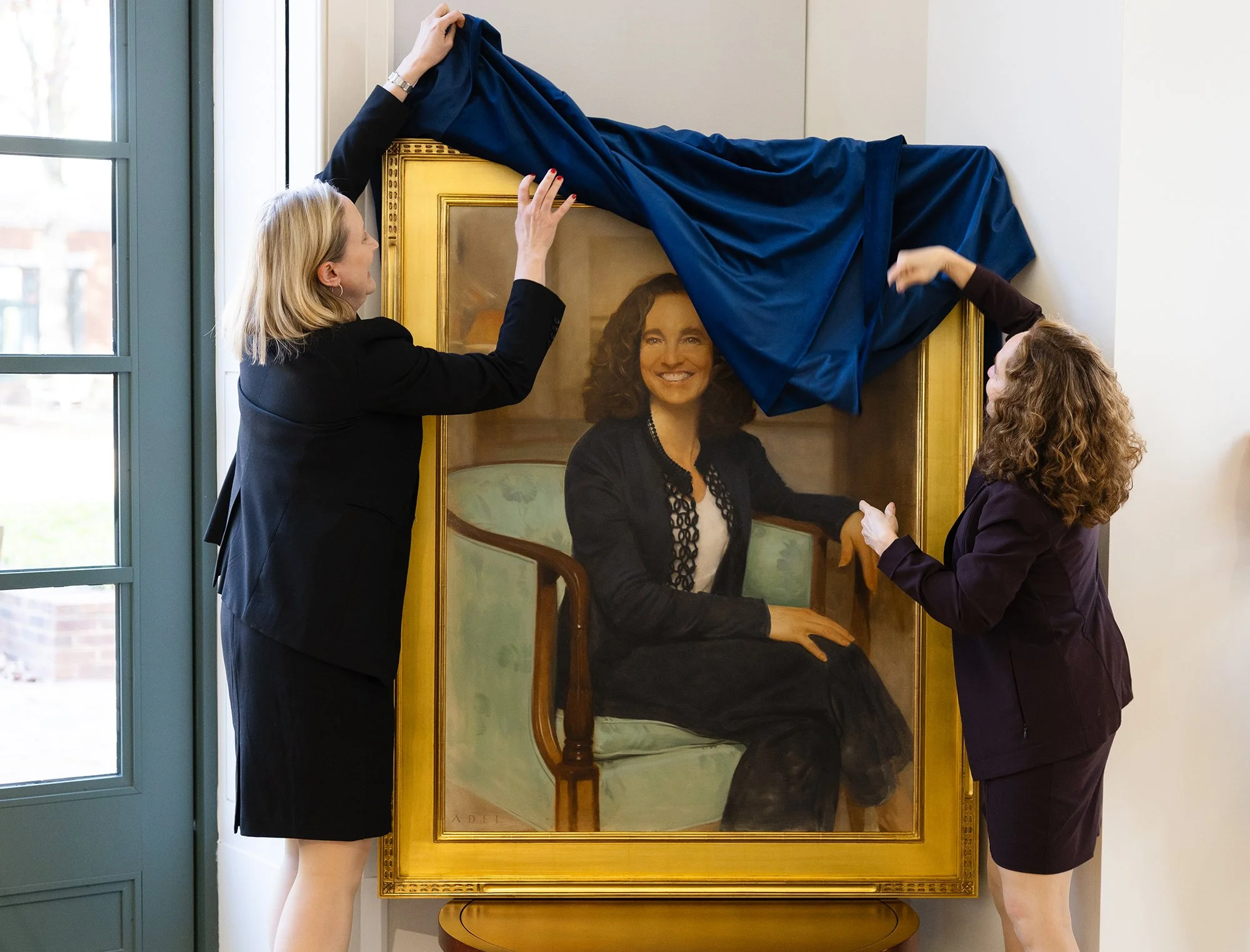
Photo Credit: UVA Law
As the Law School unveils the new portrait of Dean Goluboff, it brings to mind that ever present question: what makes a good law school dean? The natural inclination for answering such questions in the law is to search for a bright line rule or set of factors conveniently laid out in a statute or appellate opinion, but sadly these sources are silent on this question. Due to the dearth of precedent, we may look to the best law school deans in general and at UVA to distill some factors indicative of a good dean.
Dean Christopher Langdell of Harvard was one of the most innovative deans for his role in pioneering the case method of study in the late 19th century, so we may add academic innovation to our list of metrics. Similarly, the Honorable Elena Kagan trailblazed by focusing on the student experience and on hiring top tier faculty–both of which can be considered factors for our question.
In more relevant (and impressive) examples, we look to UVA’s own recent deans. Dean F.D.G. Ribble served as acting and permanent dean from 1937–1963 and oversaw additions to the Law School’s edifice, progress in its diversity, and the enshrinement of cultural institutions (including the founding of this very paper) and academic programs, despite trying times that included World War II and the turmoil of the early Cold War era. Such longevity and breadth of accomplishment are certainly indicative of a successful tenure. More recently, Dean Jeffries has continued UVA’s sterling tradition by similarly creating new academic centers, ensuring Law School financial self-sufficiency and independence from Main Grounds through a capital campaign, and writing renowned legal biographies and textbooks.
Thus, in assessing what makes for a good law school dean, we can look to a dean’s academic innovation and expansion, additions to facilities and finances, focus on the student experience and quality of life, and their own achievements as a legal scholar.
While this may not be a bright line rule, it is apparent that according to all the factors, Dean Goluboff clears the threshold. For the academic innovation and expansion factor, Dean Goluboff hired dozens of the preeminent faculty from around the country and set up research and practicum centers to advance the intellectual mission of the Law School. Similarly, she oversaw the creation of the Roadmap Scholars Initiative, thereby opening the doors to a legal education to countless new students, and helped expand the Virginia Loan Forgiveness Program to allow Hoos to serve the Commonwealth after graduation.
When it came to furthering the school’s financial independence, Dean Goluboff led the Honor the Future campaign that surpassed the stated goal of $150 million and raised over $170 million to support the school and improve the already sterling student experience. She also saw the school complete the Karsh Student Services Center, which now houses those offices that most closely support students including the career counseling, admissions, financial aid, and clinics.
In addition, Dean Goluboff directly focused on honoring and enhancing the student experience. In recognition of some of UVA’s marquee students from the past, she led the creation of the Gregory H. Swanson Award, commemorating the first Black student at the Law School, and the Elaine Jones Scholarship, honoring the first Black woman to graduate from the Law School in 1970. The creation of the Karsh-Dillard Scholars further demonstrates her combination of honoring the past while supporting the future of students.
The last, but certainly not least, factor to weigh is a dean’s academic scholarship, and Dean Goluboff certainly excelled here as well. She is a leading scholar on the history of civil rights and the law, having written The Lost Promise of Civil Rights in 2007, which won multiple prestigious legal research awards. Then, since serving as dean was not enough, she wrote Vagrant Nation: Police Power, Constitutional Change, and the Making of the 1960s during her tenure in charge.
While, as with any good factor-based test, no one factor is dispositive, the fact that Dean Goluboff excelled in each and every one of the relevant factors certainly answers the question affirmatively that she was one of UVA Law’s best deans. In fact, after assessing her vast quantity and quality of contributions to the legal community at UVA and beyond, we would add a bright line rule to our answer of what makes a good dean, which is that going by “Dean Risa Goluboff” is as clear an indicator as any of being a good dean and being well deserving of a larger-than-life portrait.
__
Staff Editor — Andrew Moore ’28