
The Law School’s art collection shapes students’ visual experience, but there’s little accessible information about most pieces. On Friday, two members of the School’s Art Committee—Head of Special Collections Randi Flaherty and Creative Director Warren Craghead—took students on a walking tour of the collection. Headed by Professor Andrew Hayashi and made up of professors and staff, the Committee advises the Dean on the acquisition and placement of artwork around grounds. Many of these works are freely donated, which lets the School build out the collection without spending students’ tuition.
Slaughter Hall’s first floor is themed around “texture.” One notable example is Tree for Mine, Snap, Crackle, Bop, by Robert Reed. This black-and-white print differs from Reed’s highly colorful works, but it reflects his energetic compositions, architectural references, and use of autobiographical elements. Reed named the Tree for Mine series in reference to his childhood address: “three four nine” 10 ½ Street, Charlottesville, Virginia. An abstractionist, Reed was somewhat isolated from mainstream Black artists of the 1970s, but his black-and-white composition takes on a different meaning when one recalls he grew up in a segregated Charlottesville. To me, the print suggests, among other things, a column smashing through checkered floors and perpendicular walls—features one might find in local neoclassical architecture.
The School’s abstract art complements its large collection of dean, professor, and alumni portraits. Several of these once gave Clay Hall its nickname, “Pale Male Hall,” before they were moved to the second floor of Slaughter under then-Dean Risa Goluboff. Professor Stephen Southall 1841 was the junior member of the School’s two-person faculty when Lilia Maria Smith Cock completed his portrait in 1883. Cock, who was born in Pavilion V, became a renowned regional portraitist and painted several figures associated with the University.
Destruction of the Deuce, by JonOne, is more representative of the School’s newer acquisitions. Born John Perello in New York City, JonOne began as a graffiti artist, later relocated to Paris, and successfully transitioned to the gallery world. Like, for example, Jackson Pollock, JonOne completed this piece by layering paint and ink with gestural movements.
Larger works dominate the School’s public areas, but there are also excellent pieces in and around the faculty offices. Likely the most renowned artists in the collection are Christo and Jeanne-Claude. The pair are best-known for sprawling installations in public parks and buildings, such as Wrapped Reichstag, which covered the German parliament in fabric, and The Gates, 7,503 steel-and-nylon gates in Central Park. These pieces came earlier in their career, when the artists worked with discarded windows and doorframes or the interiors of storefronts. Specifically, they come from a series called Show Windows, each of which features a window painted and covered from the inside. Many of the pair’s works deal with veiling and hiddenness, but this one also makes a great mirror.
A nearby entry was donated by Frederick Shauer, a renowned Law School professor who passed away in 2024. Aside from his leading work on legal theory, evidence, and free speech, Schauer was an accomplished amateur photographer and collector. Sol LeWitt worked collectively with assistants in a wide range of media. Associated with minimalism and conceptual art, many of LeWitt’s works explore variations in simple geometric elements. Six Geometric Figures Superimposed in Pairs Black and White is almost aggressively spare, like a dissertation on the polygons you encountered in elementary school. The cerebral work suggests rationalism and formalism, whether in art or law.
The Art Committee continues to acquire new works. The aim is to build a collection that matches the caliber of work at the Law School.
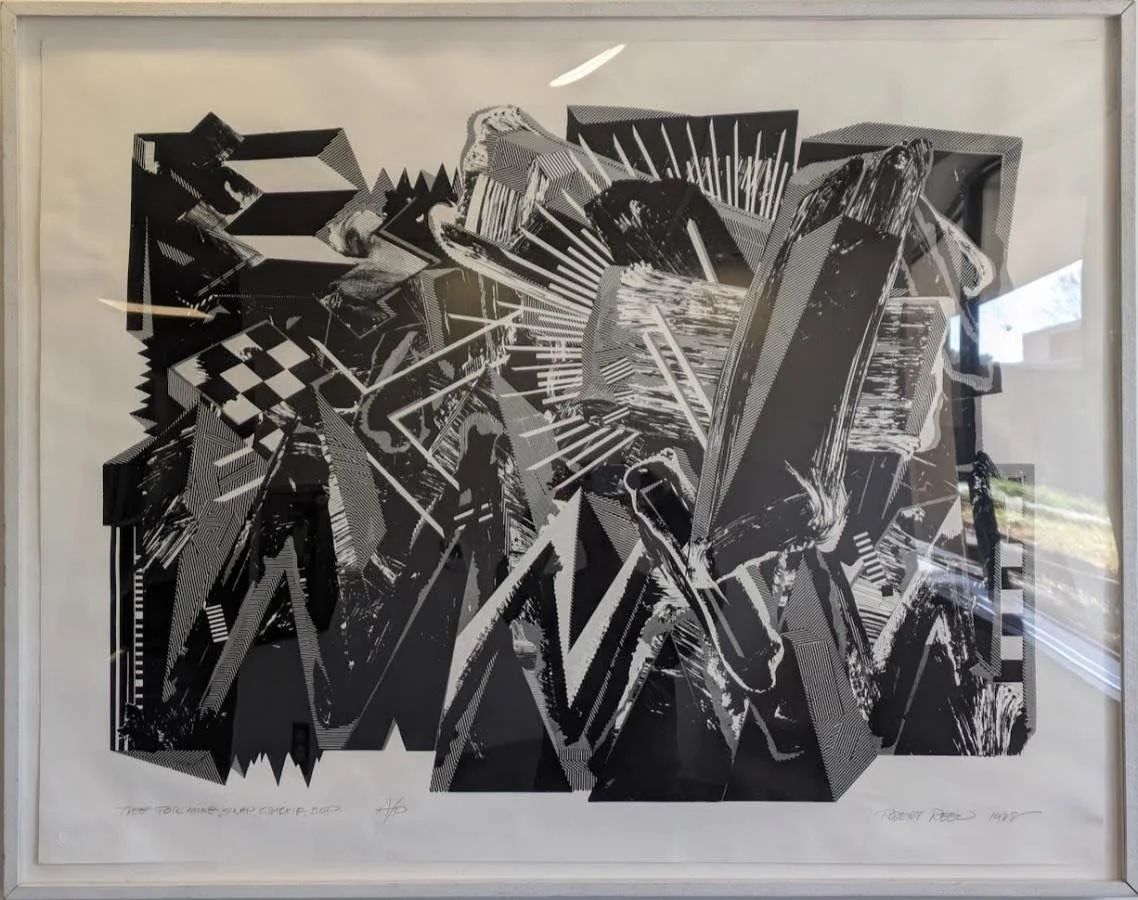
Robert Reed, Tree for Mine, Snap, Crackle, Bop
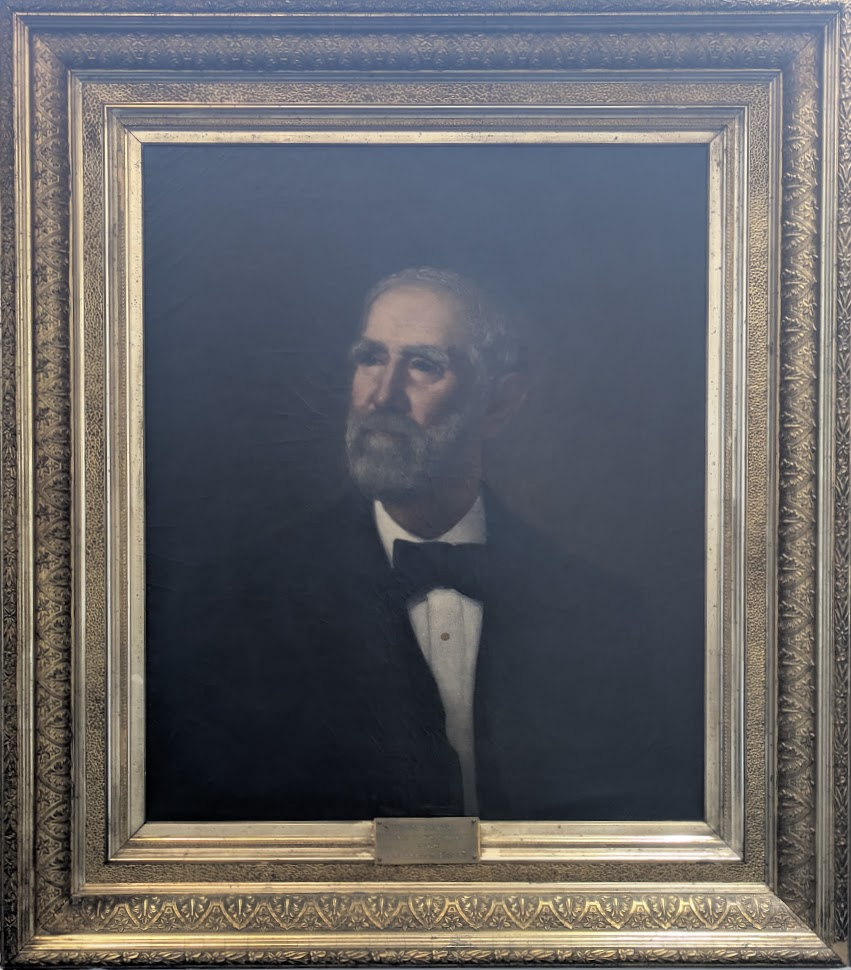
Lilia Maria Smith Cock’s portrait of Professor Stephen Southall
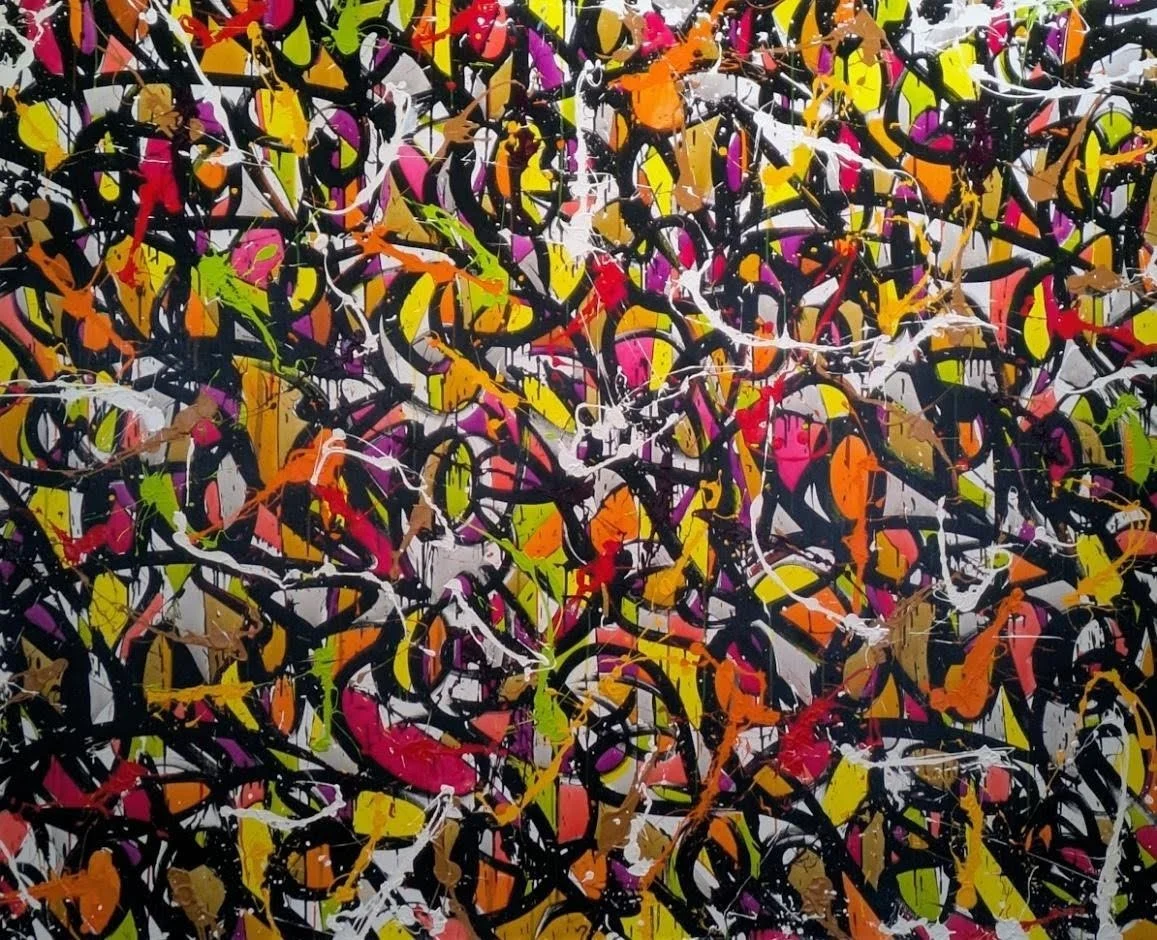
JonOne, Destruction of the Deuce
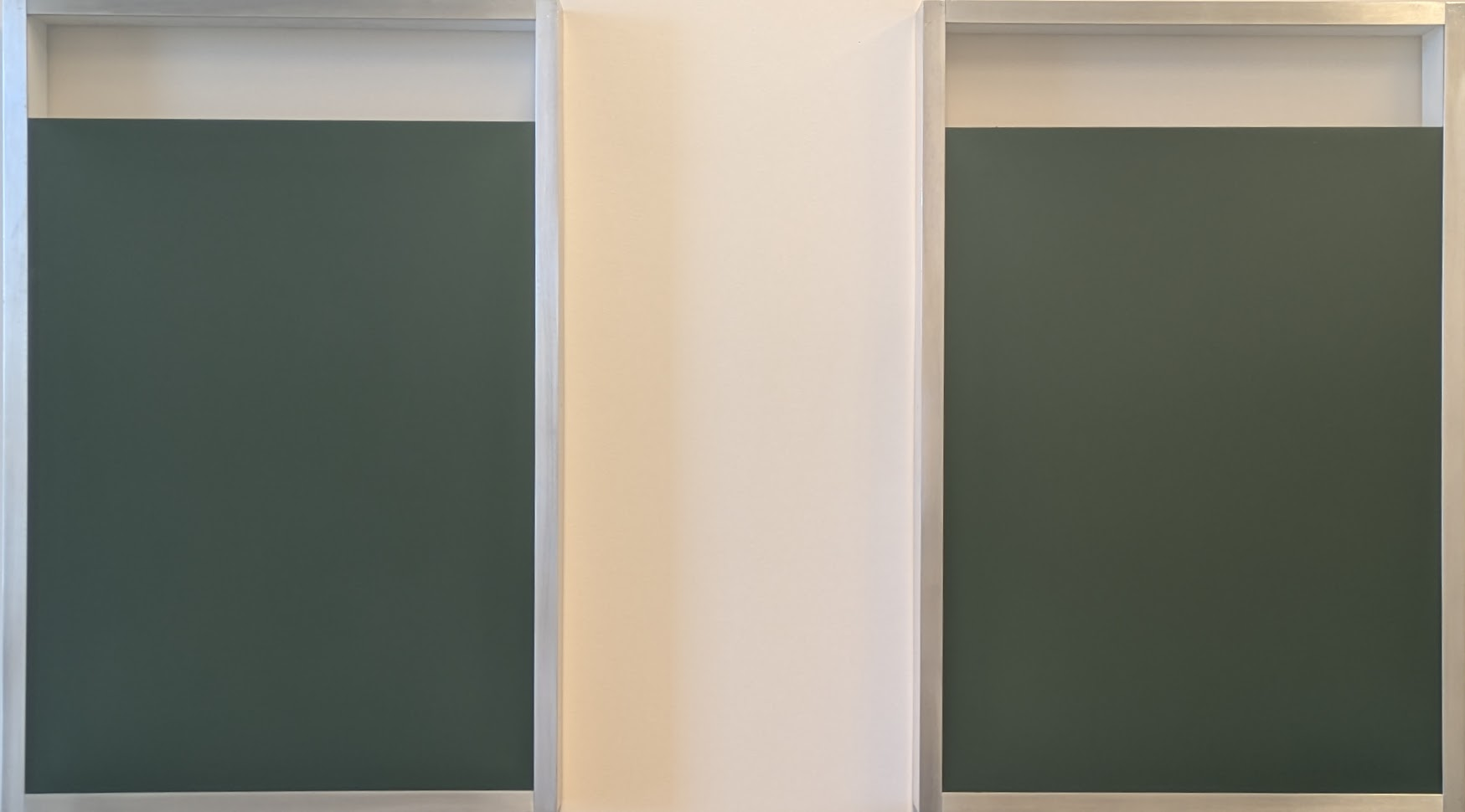
Christo and Jeanne-Claude, Show Windows
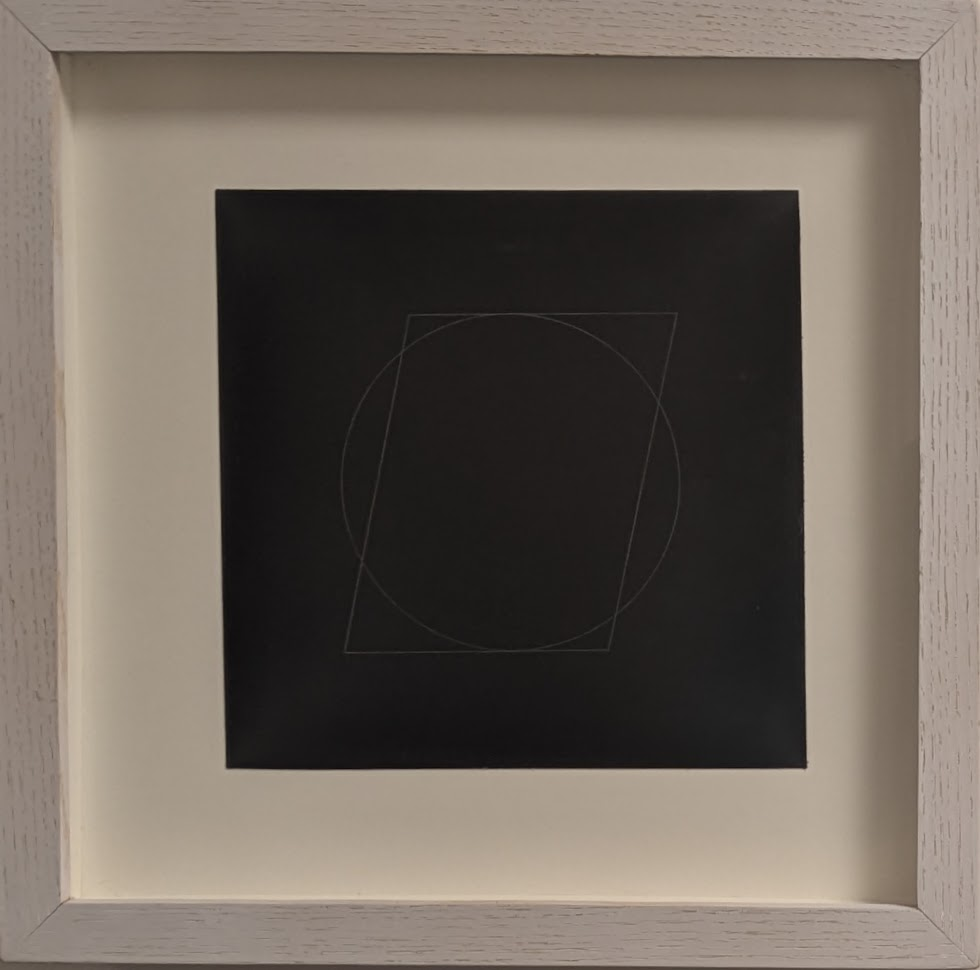
Sol LeWitt, Six Geometric Figures Superimposed in Pairs Black and White (detail)
Author: Jason Vanger ’27, nnk2gn@virginia.edu