Fourth Circuit Hears Argument in Caplin Pavilion
Source for all photos: UVA Law
If asked to imagine a courtroom, your mind probably would not conjure up images of a school auditorium. But the metal detectors and security outside the Law School’s own Caplin Auditorium on Thursday, February 12, would have subverted those expectations as they guarded the Fourth Circuit Court of Appeals holding oral arguments within.
The Fourth Circuit generally sits at the Lewis F. Powell, Jr. United States Courthouse in Richmond, Virginia. But the Fourth Circuit will also sit by invitation at law schools throughout the circuit, which encompasses Virginia, Maryland, West Virginia, North Carolina, and South Carolina. The practice is reminiscent of the early circuit riding days of the federal Judiciary, where Supreme Court justices travelled across assigned circuits to sit with district court judges in their respective judicial districts to hear arguments. Circuit riding brought the federal Judiciary to local communities, serving to both educate the public about the Constitution and federal law, but also to expose the justices to these same communities.
The Law School is one of four schools to host the Fourth Circuit during the 2025–2026 Term. Despite the Law School’s relative proximity to the Fourth Circuit’s regular courthouse in Richmond, this is the first time the Fourth Circuit has sat by invitation at the Law School since the 2015–2016 Term.
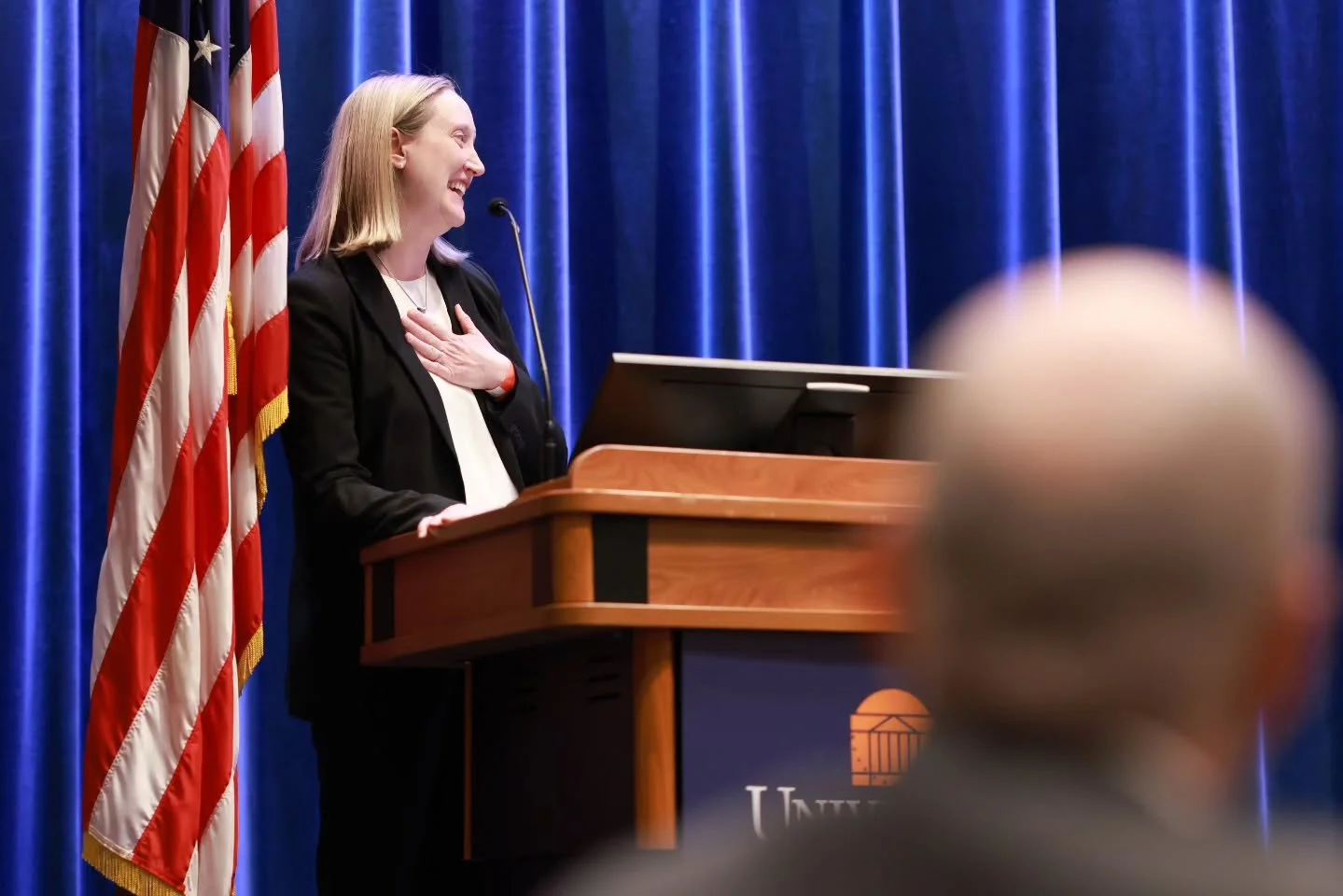
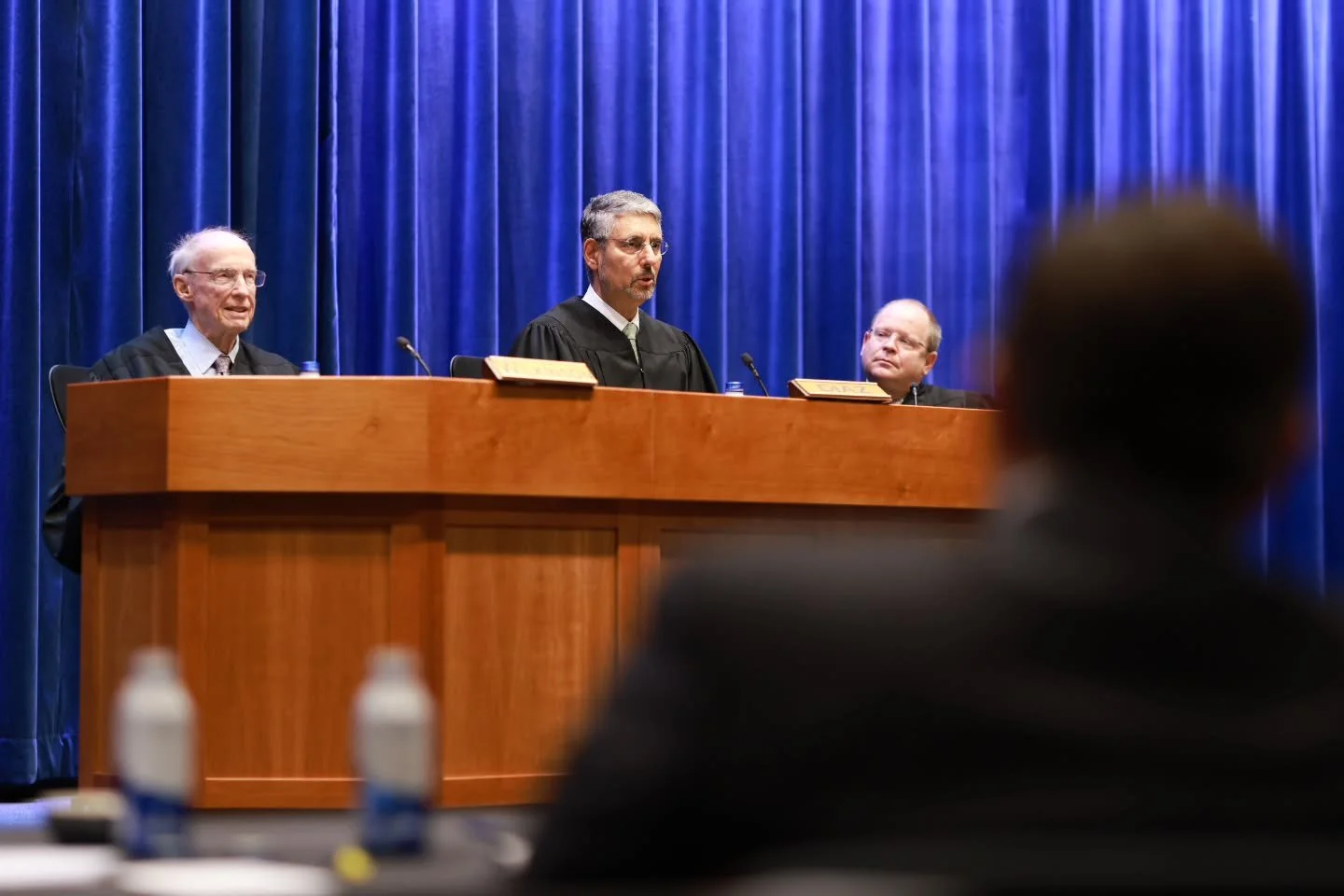
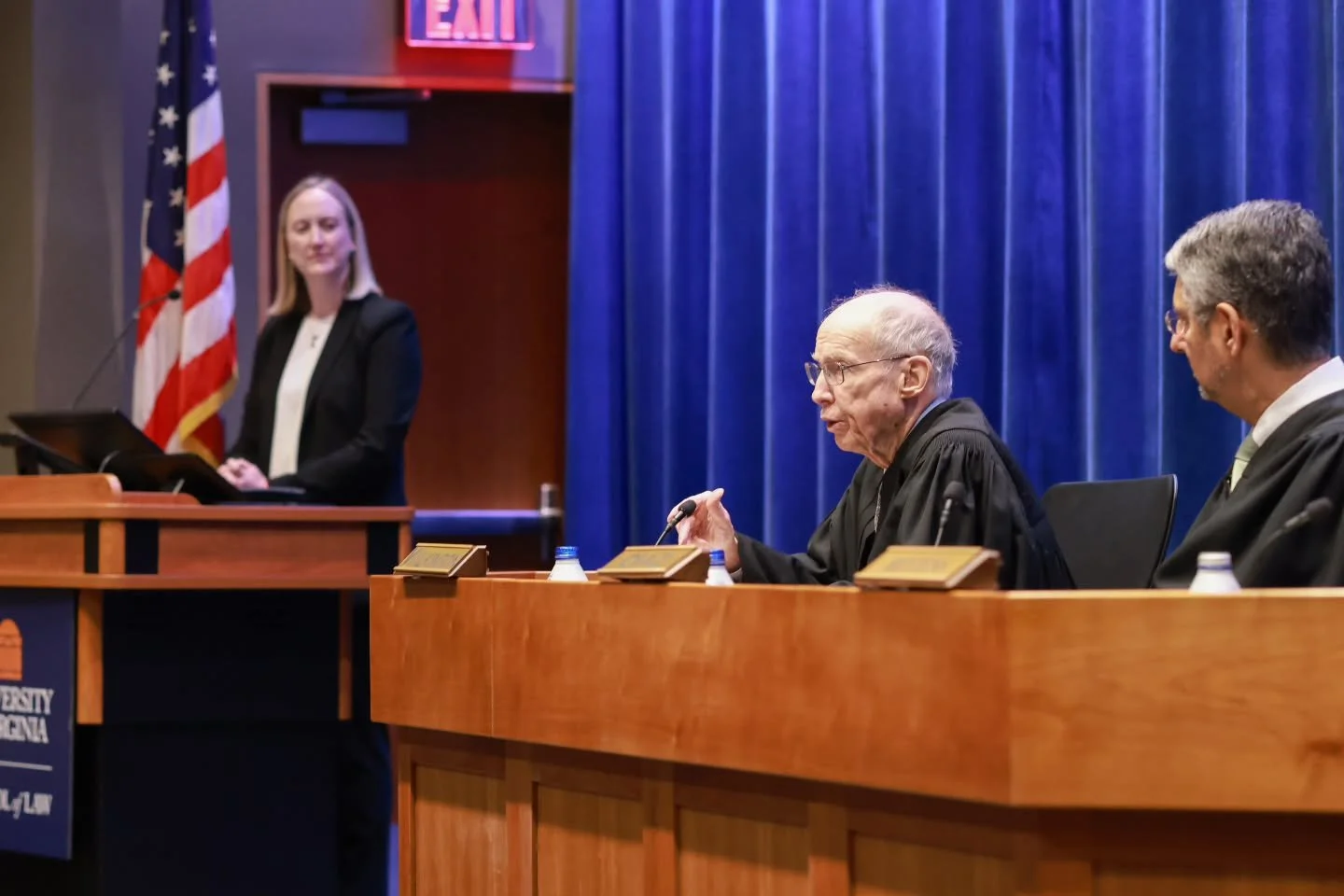
Once through security—which prohibited even cell phones from being brought inside—observers were free to enter the auditorium. The judges’ bench sat elevated atop the stage, backed by a royal blue curtain, imbuing the auditorium with a regal and dignified air. Beneath the stage was a podium for the advocates, flanked by two tables, one each for the appellee and appellant. A coterie of judicial clerks occupied the seats on the left side of the auditorium, intermittently taking notes on legal pads and laptops throughout the oral arguments.
Situated further to the right of the stage was another table, where a sole clerk sat to open the court’s sitting: “The Honorable, the judges of the United States Court of Appeals for the Fourth Circuit. Oyez, oyez, oyez, all persons having any manner or form of business before the Honorable, the Court of Appeals for the Fourth Circuit, are admonished to draw nigh and give their attention, for the court is now sitting. God save the United States and this honorable court.” With all the elements necessary to hear oral arguments in place, I imagine this is the moment where the mere auditorium became something more—a moment of legal transubstantiation whereby Caplin Auditorium became a court of law.
Three cases were on the docket on Thursday. First, a criminal case concerning whether the district court below erroneously found that the appellant knowingly committed health care fraud. Second, a sentencing case concerning whether the government had established that error under Erlinger v. United States is harmless beyond a reasonable doubt. And third, a civil case concerning whether the Court possessed the power to review the district court's order remanding an action to state court based on a finding that the defendant purportedly improperly consolidated two state cases upon removal. In sequence, counsel for the appellants, then appellees, took to the podium to argue their cases before the presiding judges.
As is typical, three judges heard arguments in each case: Chief Judge Albert Diaz; Judge J. Harvie Wilkinson III ’72, and Judge Toby Heytens ’00. The interplay of the three judges’ styles was one of the more fascinating aspects of the arguments on display. In his casual southern drawl, Judge Wilkinson was comfortable occupying the advocates’ allocated time, at times even seemingly lecturing on a legal or policy point. Judge Heytens, in contrast, maintained a faster tempo in his colloquies with the advocates. Quick-witted, sharp, and precise, he was not afraid to challenge or interrupt the advocates if their responses were unsatisfactory. Chief Judge Diaz sat somewhere between these two—well, he also literally sat between Judge Wilkinson and Judge Heytens on the bench. Judge Diaz sounded more like the paternal figure amongst the judges, often ceding time to either Judge Wilkinson or Judge Heytens before interjecting with an astute and concise question delivered in a softer and more amenable tone.
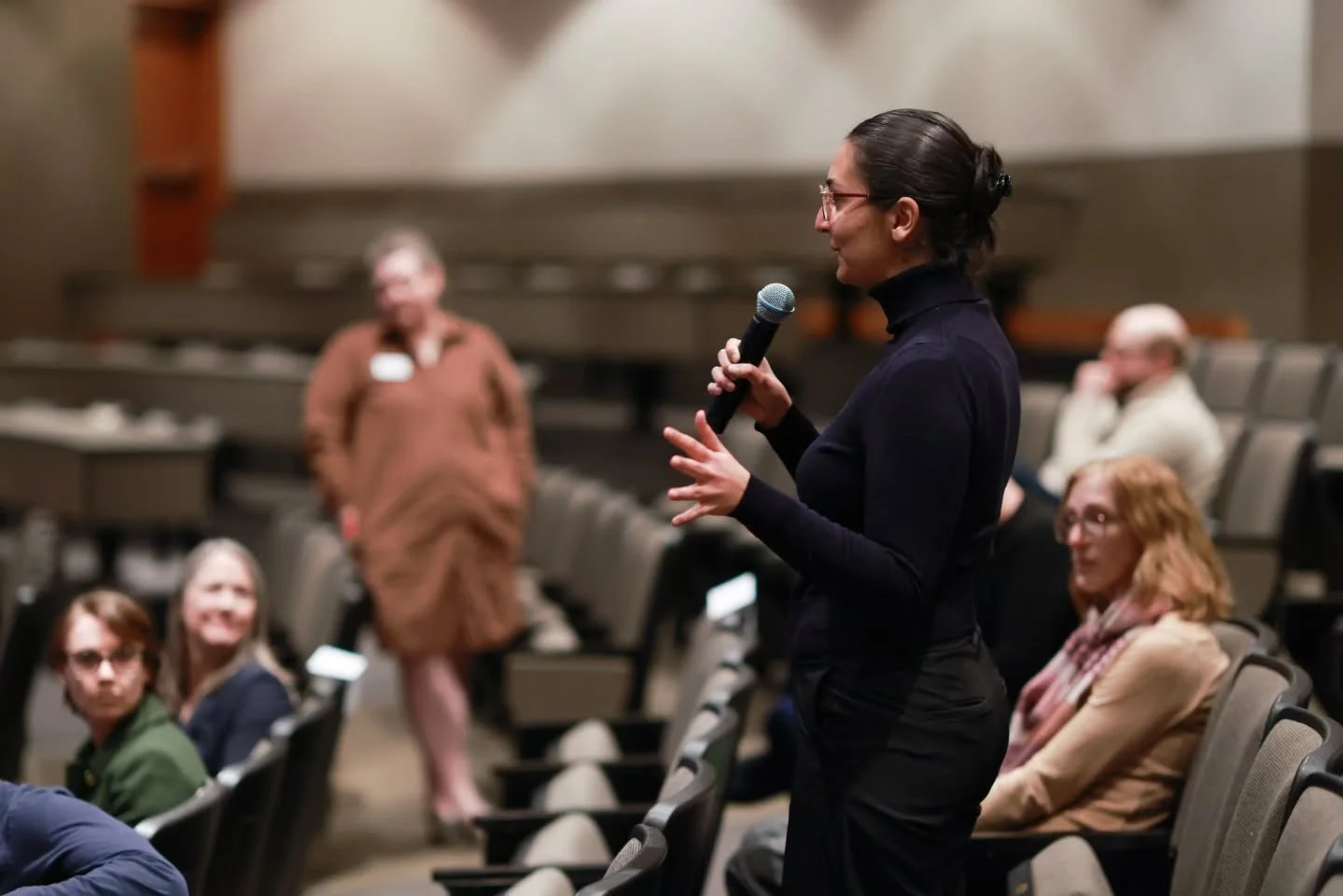
Regardless of the dynamics of the oral arguments themselves, the judges emerged from the bench at the conclusion of each argument to personally greet and congratulate each of the advocates on their performance. As was revealed during a question-and-answer session moderated by Dean Leslie Kendrick ’06—herself a former clerk for Judge Wilkinson—after arguments were heard in the final case, this practice is unique to the Fourth Circuit. The practice has a “long tradition that has far preceded me,” remarked Chief Judge Diaz. Judge Wilkinson, who has been on the court since 1984, joked that it provides him “a little more liberty, a little more license to go at the litigants hard” during the oral arguments. But the heart of the practice is “recognizing the role of the lawyers in aiding the court in arriving at a decision,” noted Chief Judge Diaz. It helps the court and its judges express the respect they have for the attorneys performing the difficult task of appellate advocacy, no matter how antagonistic the judges may have appeared during arguments. Visiting out-of-circuit attorneys may be forgiven, though, commented Chief Judge Diaz, for “wondering if we are coming down to finish the job.”