A Chinese (New Year) Time in My Life
Source: Author
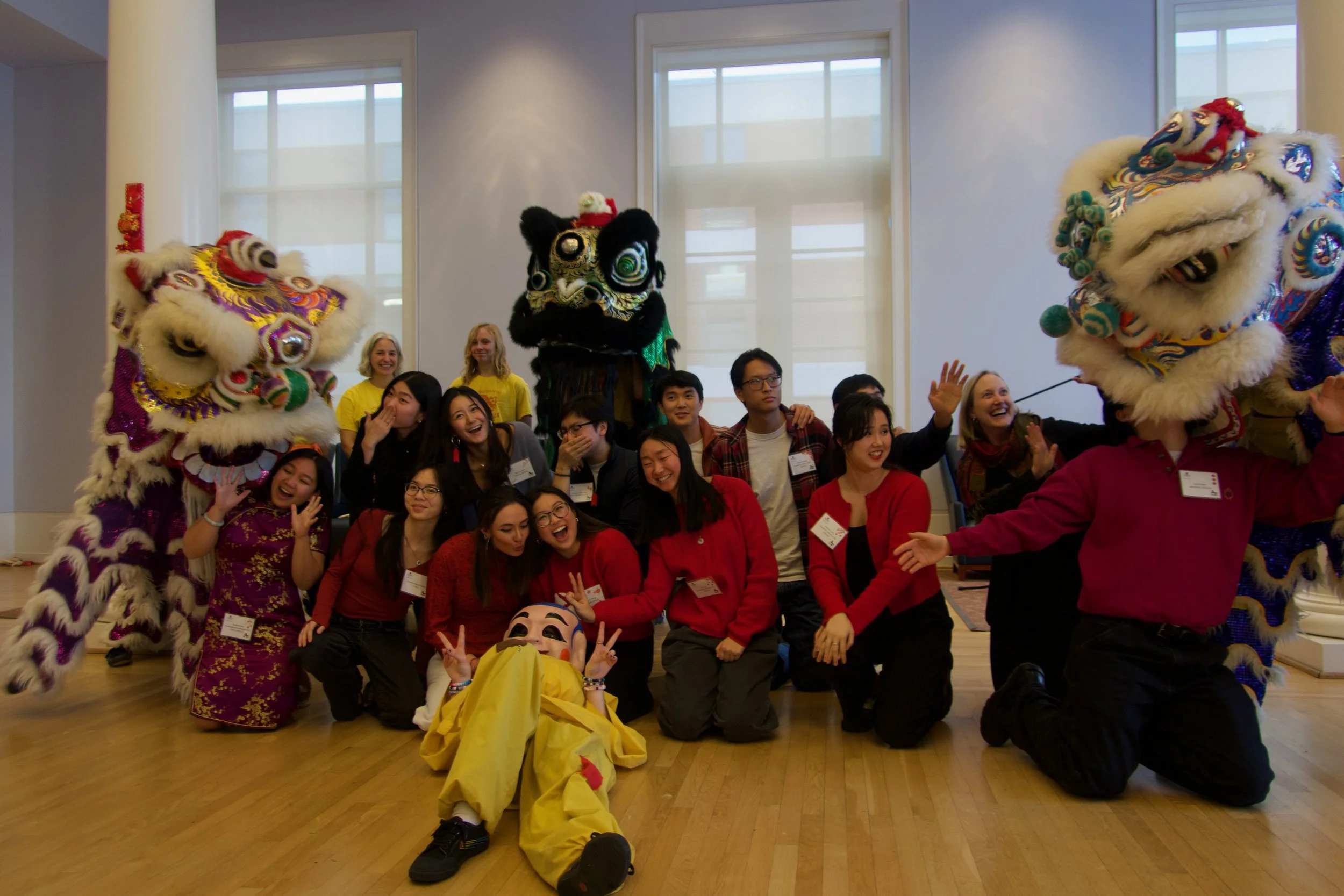
On Friday, February 13, APALSA hosted its annual Lunar New Year celebration in Caplin Pavilion. The whole school was invited to participate in the festivities. The room was decorated in red, traditional snacks were handed out, and a lion dance was performed to the delight of the audience. In the crowd, law students, professors, and family members laughed and cheered for the performers as they tossed lettuce from the lions’ heads, a sign of good luck in Chinese culture. As the lion dancers’ drums echoed out and the performance came to an end, a fellow Law Weekly member asked what I thought of the performance and whether it was “authentic”—an innocuous but intriguing question that rippled through my mind in the coming days.
Having grown up the child of Chinese immigrants, the Lunar New Year was nothing short of a spectacle. Though the other holidays came and went, Lunar New Year was the one time a year I saw my mother prepping food for days, and expectations were exceedingly high. When I was younger, it was flying out to China to see distant relatives, kneading lots of dumplings, and looking forward to that glossy red envelope. When I became of school age and was no longer given the day off, we would call in with well wishes from abroad and eat hot pot with our neighbors. Having played the guzheng (a.k.a. the Chinese harp) for most of my childhood and adolescence, Lunar New Year also came with festivals and performances in the nearest Chinatowns. The halls of my house were lined with brush-pen scrolls from the previous year, and our necks were always adorned with zodiac pendants dangling from a red thread. Back then, being ‘Chinese’ was not quite something I ever thought about.
As I moved into my adolescence, I was surrounded by those of similar background to myself. Thus—as is the tradition of teenagerhood to try and be ‘different’—to be seen as assimilated was the ‘cool’ thing to do. While I was lucky enough to have never experienced the bullying and harassment suffered by so many minorities, I similarly felt quite the desire not to be seen as ‘too Chinese.’ Lunar New Year was celebrated at my high school by the international students, but never by the Chinese Americans. Those were the years I proudly refused to learn more Mandarin, thinking foolishly that I had learned enough by then.
When I moved away from the city—into a predominantly white university town at the ripe age of 18—the reality of my identity finally sank in. I missed my Asian grocery stores—the ones lined with Lao Gan Ma and goji berries. I no longer had trilingual friends to gossip with in whatever language was most convenient. And I certainly craved the comfort of my mother’s home-cooked meals at the end of every night. Those were the moments I started to regain a sense of pride in my culture, sharing it with newly-made friends. Hosting Lunar New Year dinners in a small college apartment meant clearing counter space every five minutes and six hands trying to figure out how to cut through a jackfruit (shockingly, no one got hurt). I recall wishing then that I had stuck to those Mandarin lesson plans slightly better, if only to better read a menu or two at the next Chinese restaurant we encountered.
These days, I feel the language slipping clumsily off my tongue, and conversations with family have become harder to keep up with. It is simply the curse of every immigrant child to be landlocked between identities. This reality was something I never quite grappled with until I was away from home. And now, I feel pride in being perceived as authentically Chinese, even though I have lost so many parts of that identity.
As the Year of the Horse is welcomed in, I wish you, dear readers, all a prosperous and joyful year. Go out and exchange some red envelopes, eat some noodles (for long life), and make some dumplings (for good fortune). Though perhaps it always was, it is now undoubtedly a Chinese time in my life.