
The Oscars: Awarding the Best and Worst of Film in 2025
The Academy Awards recently wrapped up the 2025 movie season and featured hilarious jokes, surprising twists and turns, well-deserved recognition for some of the year’s best films, and some of the outdated disappointments that the Oscars seem unable to escape.
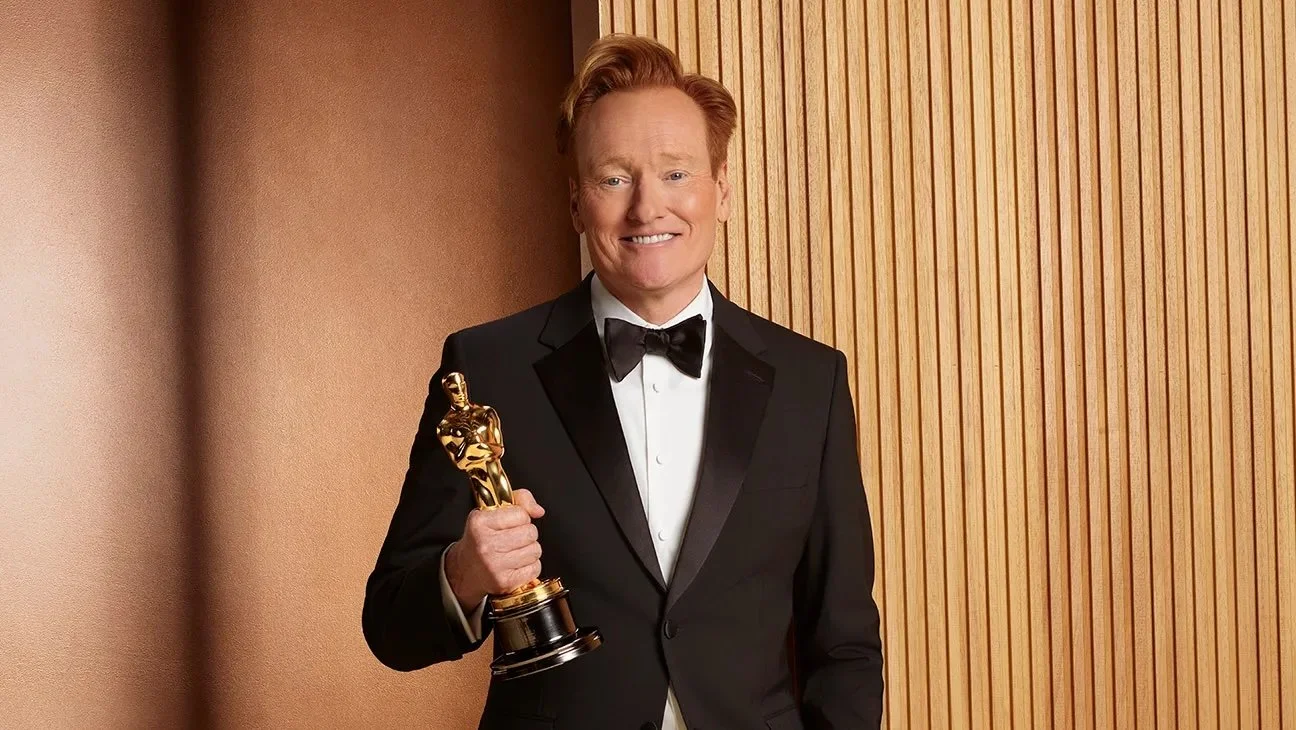
After wide praise for his hosting of the 2024 awards show, Conan O’Brien returned for an encore and continued to embrace his role as the elder statesman of Hollywood. His commitment to the bit inspires the writers of our own paper, and this ceremony was no exception. Even though he is in his sixties, Conan still ran around with the best of them in the cold open and showed off a sampling of the best the year had to offer at the movies. The jokes amused the crowd, peaking with his quip about it being Ted Sarandos’s first time visiting a theater. If anything, he and the writers could have poked more fun internally at the entertainment industry. The only real downside of O’Brien’s hosting is that he only hosts a few events each year instead of a nightly talk show.
Source: Disney
The Awards also committed to the bit so much that it crossed from irony back into genuinely unintended surprises. For just the seventh time in history, the audience witnessed a first-place tie in the voting as Two People Exchanging Saliva and The Singers each tied for Best Live Action Short Film. Thankfully, despite short notice, the announcer, Kumail Nanjiani, ably directed the crowd and allowed both films to get their due praise. It is as yet unknown how many Academy members voted for The Singers out of confusion and thinking that they were voting for Sinners, but regardless, the tie nicely reminded the world that sometimes sharing works out just fine.
Beyond the Best Live Action Short Film, the night also honored some of the best movies of 2025, with plenty of credit to go around between F1, Sinners, and beyond. Michael B. Jordan’s win for his performance as twins in Sinners showed the Academy looking to the future as it honored a difficult pair of roles that required all of Jordan’s depth and breadth of talents to tie the movie together. Between the win and his genuine acceptance speech, he continues to make the case for taking the Michael Jordan title from one of the best basketball players of all time (after Wilt Chamberlain, of course), at which point he can just go by Michael Jordan instead of Michael B. Jordan.
F1’s win in Best Sound also showed the Academy at its best as it embraced a film that deftly combined the best of auteur driven cinema, through its director Joseph Kosinski (who is building quite the reputation for spectacle between Tron: Legacy, Top Gun: Maverick, and F1) and the always great composer Hans Zimmer, with the best of cutting-edge technology through Apple’s work on the film. In going beyond merely distributing the film, Apple deployed its vast and well-resourced R&D department to develop new camera technology, showing a laudable commitment to cinema from one of the tech company streaming services about which the movie industry is concerned.
That said, the night was still marred by the Academy making some of the same mistakes it seems nearly destined to repeat at this point. In a sadly ironic move, the evening’s producers had the band play the Best Original Song winners—Ejae, Audrey Nuna, and Rei Ami—for a well-deserved “Golden,” off the stage because the rest of the ceremony was running behind schedule. If anything, the triumvirate ought to have played the producers off, but sadly, it was not to be. Instead of hearing more from the K-pop trio that the Academy has been slow to recognize, the audience heard amply from creators and movies utterly lacking in artistic merit.
On that note, while the Academy should rightfully be lauded for its recognition of F1, Sinners, and KPop Demon Hunters, among others, its confusing and unfounded love of One Battle After Another marred the evening. Instead of rewarding the creativity, ambition, and execution of the aforementioned movies, let alone the snubbed Marty Supreme, A House of Dynamite, The Naked Gun, Thunderbolts*, Mountainhead, Ballerina, The Phoenician Scheme, Black Bag, or even Den of Thieves 2: Pantera, the Academy awarded whatever One Battle After Another was. Typically, having characters worth the audience’s interest is a good minimum threshold for a movie being worth the price of admission, but One Battle After Another sadly failed even this test. The critiques of its social message are numerous and more eloquently put by other critics, but even acknowledging it as misguided gives it too much credit. It is just a bad movie, though this is not altogether surprising given the shallowness, insubstantiality, and boringness of Paul Thomas Anderson’s prior works.
As a last side note, how Frankenstein defeated F1 for production design despite the latter inventing new cameras and participating as a de facto eleventh team during the whole of a Formula One season is inexplicable. The Academy’s pathetic obsession with shallow period dramas seems alive and well, even if the movie theater industry is anything but.
Author: Andrew Moore ‘28