Fat Bear Week 2026 Survival of the Fattest
For those unfamiliar with the concept of “Fat Bear Week,” the idea is quite likely what one might expect: The brown bears of Brooks River in Katmai National Park, Alaska, are getting ready for the long winter hibernation. In preparation for a long winter, the bears must build substantial fat reserves. Hence, the “fat” in fat bears. What started in 2015 when Park Ranger Mike Fitz posted a Facebook post noticing differences in individual bear size between the beginning and end of summer, has become an internet sensation.1 Now, every year, fans gather from every corner of the internet to cast their preferences on Champion Fat Bear hosted by Explore.org. Law Weekly is well-versed in the glory of Fat Bear Week, having covered the reigning champion, Chunk, in 2025.
In a midterm year, it seems especially relevant to brush up on one’s voting abilities and pick your favorite candidate. The voting criteria are what one makes of it, but they are not simply about pure bear mass. Voters are encouraged to think about how a bear has overcome challenges they faced this summer, the effort they devoted to preparing for hibernation, and, last but not least, how fat they really got.2 The Fat Bear voting is not skin-deep; it is also about the substance of a story.
The bears are broken down in the bracket by Bear Families, Subadults, Single Adult Females, and Adult Males.3 These categories exist due to the unique circumstances and challenges faced by each type of bear. For a bear family, mother bears must not only gain enough fat for their own survival, but also spend the summer feeding, protecting, and nurturing their cubs. Cubs face their own set of challenges, from larger bears to the landscape of Alaska. Subadults are the group of independent juvenile bears that are in their awkward teenage phase. With their uneven growth spurts, Explore.org states that these bears often possess “lanky legs and a disproportionately large head and ears.”4 These bears must brave the summer without a mother’s protection and eat to fuel their hibernation and their growth spurts. Single adult female bears, while independent, must also prepare their ample fat reserves should pregnancy be looming now or in the future. Finally, adult males are normally the largest category of bear at the onset. Without a need to care for cubs, the adult male bears are there to feed their large bodies and compete for mating opportunities.
At the time of writing this article, the semi-finals are in full swing.5 Our finalists are 132 Fam, 910, 89, and 164. 132 has three spring subs and is the most experienced mother at the Brooks River. This being her fourth known litter at the parks does not mean that challenges were not faced. Early in July, one cub went missing from the family, and 132 had to forge on to care for her remaining children without the knowledge of when, and if, her final cub would return. Miraculously, the final cub reunited with the family several days later, and the family is now in the running for the champions of the summer.
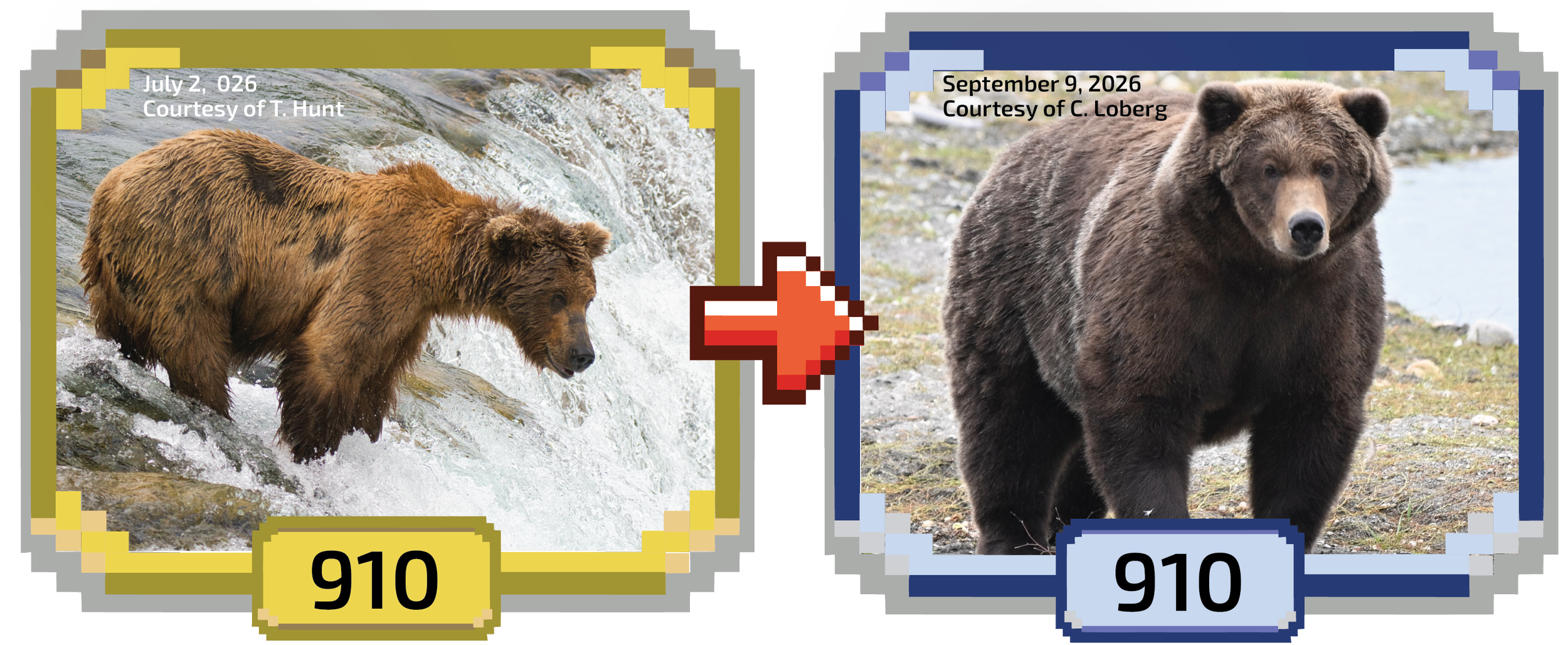
910 is a single adult female who separated from her litter only a year ago in the late spring of 2025. The daughter of a former Fat Bear Week champion, all eyes are on her to see if championships are genetic. Her first year off alone had already yielded much success, having successfully fished throughout the summer.
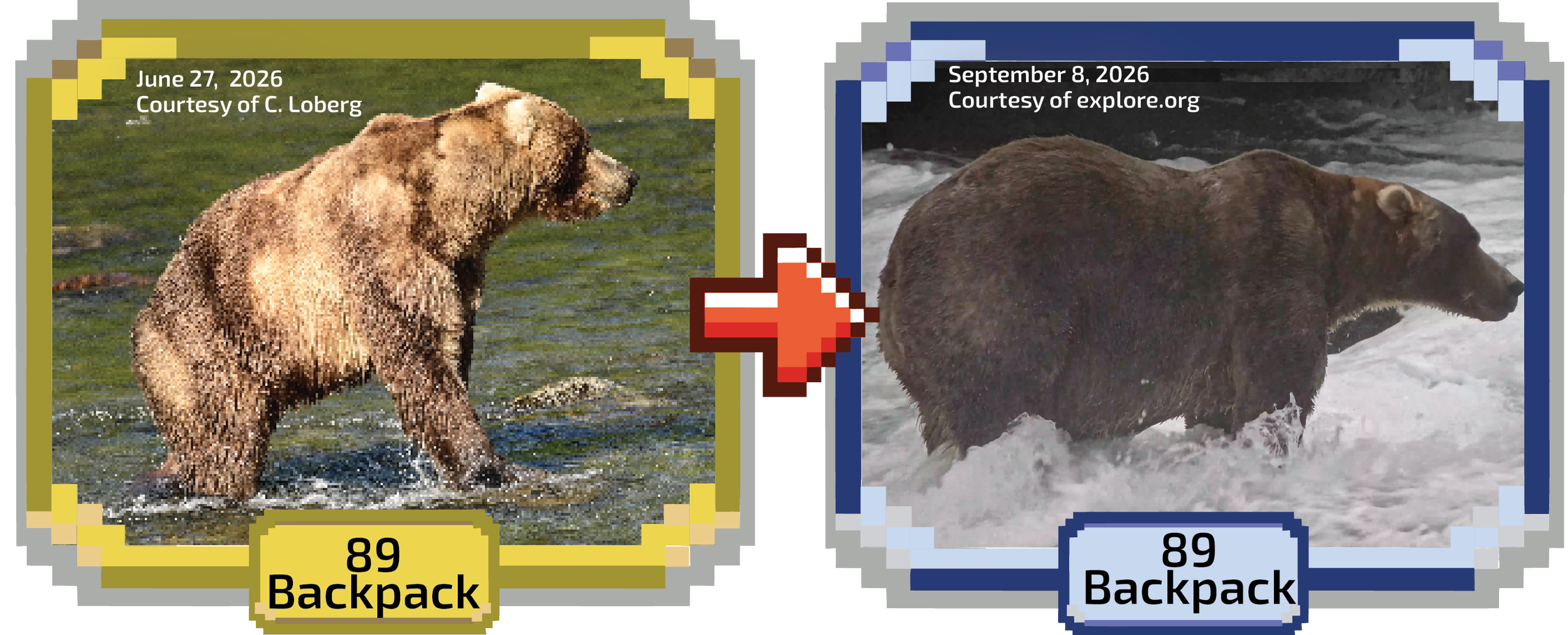
89, also known as Backpack, is the offspring of a former Fat Bear Week champion. The single male suffered a severe leg injury in 2007, one that experts were not sure he would survive. Yet, almost a decade later, Backpack has endured and continues to be a fan favorite. His biography describes his quiet nature, preferring his own fishing spots rather than aggressively competing for the popular spots. He is a lover, not a fighter.
The final candidate, 164 (Bucky), is an adult male who has gained an impressive store of fat reserves. The opposite of Backpack, Bucky is ready to challenge other bears for dominance even in areas with no fishing spots in dispute. Time can only tell if aggression is the way to a championship.
While Fat Bear Week may be soon wrapping up, Explore.org has created a special space for those of us who love a good story and a cute animal picture. The bears at the center of the competition are about to endure a harsh Alaskan winter, many coming in with their own challenges they must overcome on top of the fight for food. Like those readers who may soon be hunkered down in the quiet section of the library fighting for their survival through the exam season, these bears are fighting their way to the top.