Andrew Allard '25
Editor-in-Chief
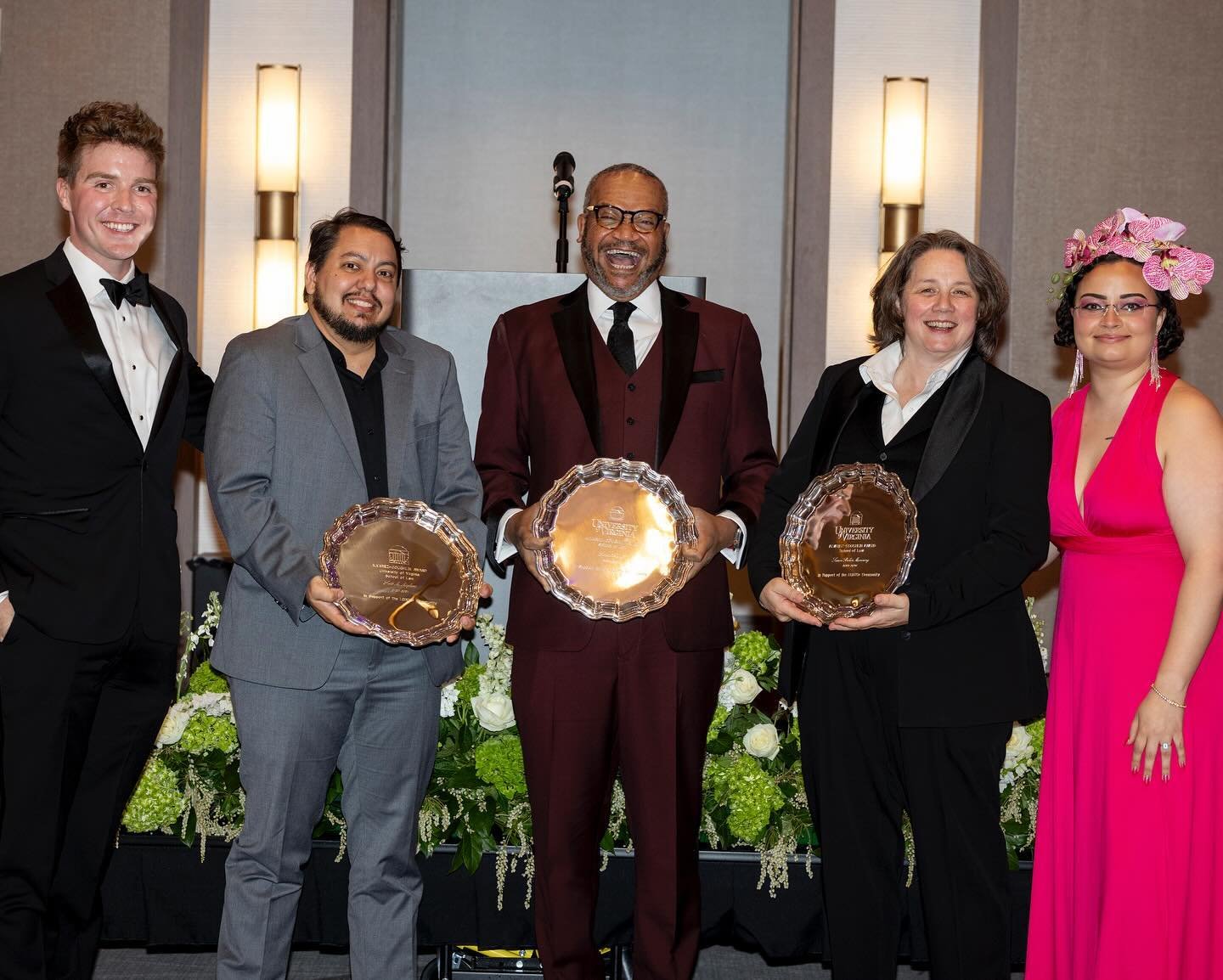
In a profound moment of humility and gratitude, Judge Roger L. Gregory of the Fourth Circuit Court of Appeals accepted the Thomas Jefferson Foundation Medal in Law last Thursday. The medal—previous recipients of which include Supreme Court Justices Stephen Breyer and Sonia Sotomayor, as well as Robert Mueller ’73 and Loretta Lynch—recognizes Judge Gregory’s remarkable journey of public service, beginning here in the Commonwealth of Virginia.

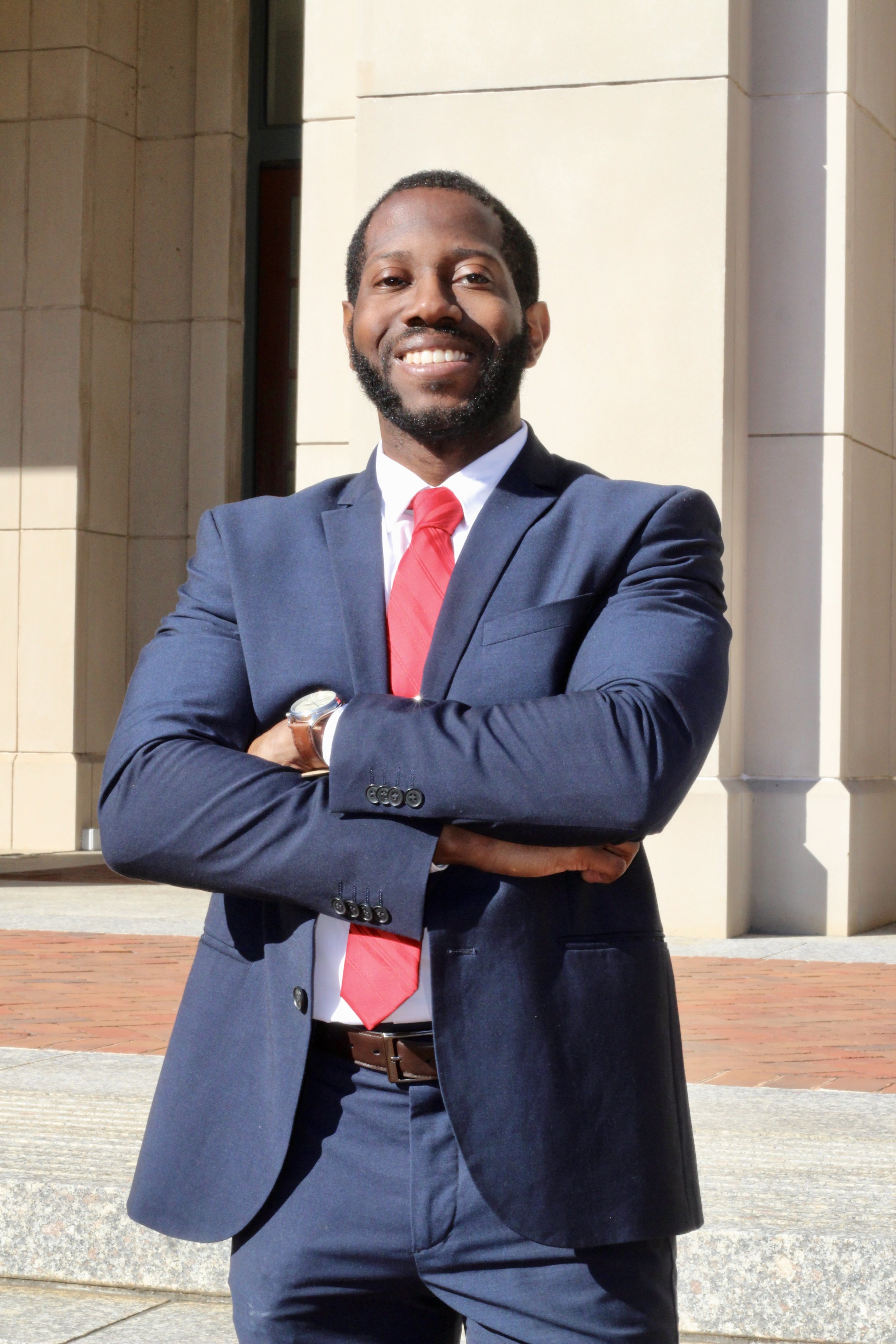
Pictured: Judge Gregory
Photo Credit: UVA Law
“When I received the letter saying that I would be the recipient of this incredible medal, I was glad that I was on level ground because I was about to faint,” said Judge Gregory. Judge Gregory noted that it was especially an honor to be at “Mr. Jefferson’s school.” Praising the Law School for its contributions to legal scholarship, Judge Gregory noted that he and Dean Goluboff first met at a panel on constitutional law. “She’s a working dean . . . She was waxing eloquently on constitutional law. I was taking notes.” Judge Gregory also noted that, thanks to his three daughters, “I didn’t go to the University of Virginia, but a lot of my money did.”
The story of Judge Gregory's ascent to the bench is etched with the indelible marks of history. He was raised in Petersburg, Virginia, where he attended a segregated public high school until the 11th grade. He later attended nearby Virginia State University as a first-generation college student, where he graduated summa cum laude. Judge Gregory then attended law school, receiving his J.D. in 1978 from the University of Michigan Law School, for which, said Dean Goluboff, “we forgive him.”
Judge Gregory went on to work in private practice and eventually established his own firm with Lawrence Douglas Wilder in 1982. He was then nominated to the Fourth Circuit Court of Appeals by two presidents—first by President Bill Clinton in a recess appointment, and later by President George W. Bush after the first appointment expired. Clearing the Senate with a near-unanimous vote, Judge Gregory became the first Black judge to serve on the Fourth Circuit, and he remains the only judge appointed to a federal appellate court by presidents from both major parties.
From 2016 to 2023, Judge Gregory served as Chief Judge of the Fourth Circuit. During his tenure as Chief Judge, Gregory wrote the majority opinion in International Refugee Assistance Project v. Trump,[1] upholding an injunction against President Trump’s travel ban that restricted admission of refugees from seven majority Muslim countries. Judge Gregory also highlighted two death penalty cases that the Court reviewed, ultimately resulting in a reduced life sentence for one defendant and exoneration based on actual innocence for the other. “After seventeen years on death row, he was released . . . All cases are important, but those ones stand out,” Judge Gregory said.
Reflecting on the honor bestowed upon him, Judge Gregory evoked the intertwined threads of history and memory. Situated in the former capital of the Confederacy, Judge Gregory’s chambers in the Lewis F. Powell, Jr. U.S. Courthouse are a poignant symbol of change juxtaposed against the grim echoes of history. Judge Gregory noted that from his window, he can see Thomas Jefferson’s state house and a statue of Barbara Johns, a civil rights activist who, as a high school student, helped to initiate one of the consolidated cases in Brown v. Board of Education.
Judge Gregory thus sits at a complex intersection of our nation’s history—a history that has undoubtedly shaped his view of the Constitution. Judge Gregory noted that, since the beginning of the Republic, the question of who are “We the People” has perplexed legal thinkers. “People that looked like me would not be so if we were textualists or originalists,” Judge Gregory said. Noting the importance of adhering to the Constitution, he continued, “The good thing about that is also the bad thing about that . . . Everybody has a different view of what that means.”
But for Judge Gregory, the struggle over constitutional meaning is itself important. “Text without context is pretext,” Judge Gregory said. “The Constitution must be interpreted with contextual sensitivity to changing circumstances so that it imposes reasonable requirements in such circumstances,” he continued, citing Justice Joseph Story, who served on the Supreme Court alongside Chief Justice Marshall.
“Constitutionalism is a blessing because we adhere to the Constitution, but it can be a curse if we engage in distorted constitutionalism,” Judge Gregory said, pointing to John C. Calhoun’s constitutional defense of slavery and Chief Justice Taney’s opinion in Dred Scott. “I love the Constitution . . . but there's nothing talismanic about these words unless they're in the heart.”
Asked how his life has affected his jurisprudence, Judge Gregory recalled a friend who spent much of his adult life in prison due to substance abuse. Now recovered and out of prison, he helps guide others through prison and addiction. “From diabetes, he’s now almost blind . . . and he said ‘I’ve never seen clearer in my life than I see now today,’” Judge Gregory said, choking back tears. “That’s how we’ve got to see the Constitution.”
---
tya2us@virginia.edu
[1] 883 F. 3d 233 (4th Cir. 2018).