Proposed Virginia Legislation Possibly a Reaction to Federal Litigation
Over 1300 bills have been introduced on the House side of the Virginia General Assembly for the 2026 legislative session. It would be an entire course in itself to study even a decent portion of these bills. So, imagine my surprise when, upon idly perusing the captions of a few bills, I noticed two which appeared to be responses to federal litigation that I had previously encountered.
I should caveat the foregoing article: I have not spoken with the bills’ patrons, meaning I cannot be certain that they are reacting to federal litigation. But, to my mind, these bills bear a striking resemblance to legal disputes that have yet to recede too far into the past.
The first bill that caught my attention, House Bill 28 (“HB 28”), creates a 90-day quiet period for systematic review of ineligible voters prior to all primary and general elections. [1] Sound familiar? In late 2024, Commonwealth officials admitted in court that the Commonwealth had, as of October 2, removed 1,600 registrants from voter rolls within the 90-day quiet period mandated by the National Voter Registration Act (“NVRA”). [2] The Department of Justice and a coalition of over forty nonprofits had sued under the NVRA, in part alleging violation of the NVRA’s quiet period mandate.
The NVRA is a federal statute, meaning that its jurisdiction is limited to federal elections. However, state governments administer both federal and state elections, which could effectively allow federal legislation to act as a canopy over both federal and state elections. Unfortunately (or fortunately—this is a very controversial topic), Virginia is one of four states that holds its elections out of sync with the federal cycle, which prevents NVRA benefits from coinciding with state elections. [3] Plus, given the Supreme Court’s shadow docket ruling against the plaintiffs in the aforementioned litigation, the force of supposed NVRA protections remains ambiguous. HB 28 and its Senate companion, Senate Bill 52, in my estimation, seek to close the gap created by off-cycle elections and moot the ambiguity of the NVRA’s force with respect to state elections.
The second bill that caught my eye, House Bill 40 (“HB 40”), attacks the manufacture, assembly, sale, transfer, and possession of ghost guns. [4] While ghost gun litigation has become rather ubiquitous, this bill reads like a reaction to the Supreme Court’s 2025 decision in Bondi v. VanDerStok. The Court in VanDerStok allowed the ATF to interpret the Gun Control Act of 1968’s (“GCA”) definition of a firearm to include gun kits and partially complete frames or receivers. [5] The major result is that the ATF can regulate gun kits and unfinished frames and receivers—the Court fixates on regulation of Polymer80’s “Buy Build Shoot” kits, likely at least in part because Polymer80 had become a major litigation target in recent years. [6]
VanDerStok staved off plaintiffs’ challenge for the time being, but that was in part due to the fact that the plaintiffs had brought a facial challenge to the ATF rule before it could be implemented. [7] The standard for a facial challenge is high: the plaintiffs had to show that the ATF rule was inconsistent with the GCA on its face. Proof that certain applications of the ATF rule would violate the GCA would not meet this standard. [8] The Court found that because some weapons kits satisfy the GCA, the ATF rule as it related to kits was not facially invalid. [9]
The facial challenge limited the Court’s inquiry into applications of the ATF rule, leaving open further avenues for litigation. Furthermore, the ATF rule is just that: a rule, which is far more mutable than a statute. For legislators concerned about regulation of ghost guns, VanDerStok may not be wholly satisfying, although it is a promising step.
HB 40 borrows directly from the GCA’s definitions of key terms and regulatory requirements: it cites directly to the GCA. [10] Whereas the current code section addressing ghost guns proscribes actions involving plastic firearms, HB 40 modernizes the Code to regulate ghost guns made of a variety of materials, as well as the kits themselves and unfinished frames and receivers. [11]
HB 40 may not be an attempt to bolster federal policy at the state level, since it so closely tethers its meaning to the GCA. Instead, it may serve more as an enforcement vehicle, as it constructs misdemeanor offenses around GCA violations. Unlike HB 28, HB 40 may be focused more on implementation of favorable federal policy as opposed to HB 28’s gap-filling function.
This article is more than an excuse to have a dialogue with myself by citing my own pieces. The law is, like art, one of the great multidimensional and multigenerational dialogues that we can take part in. Particularly in a time like this, when the states and federal government are warring over deep, fundamental issues, it serves to explore the interactions between federal and state policy—to see what works, what doesn’t, and what is surprising.
1. https://lis.virginia.gov/bill-details/20261/HB28
2. https://www.lawweekly.org/front-page/2024/11/11/christmas-comes-early-for-youngkin-with-surprise-scotus-win?rq=voter%20roll
3. https://www.vpm.org/news/2025-08-20/curious-commonwealth-off-year-elections-civil-war-tarter-grant
4. https://lis.virginia.gov/bill-details/20261/HB40
5. Bondi v. VanDerStok, 604 U.S. 458 (2025), Syllabus
6. https://www.lawweekly.org/front-page/2025/3/5/f05bvzzonukd5x2l781zwcoy7fa0xr?rq=polymer80
7. Bondi v. VanDerStok, 604 U.S. 458, 466 (2025)
8. Id. at 468
9. Id., Syllabus
10. https://lis.blob.core.windows.net/files/1082077.PDF
11. Id.
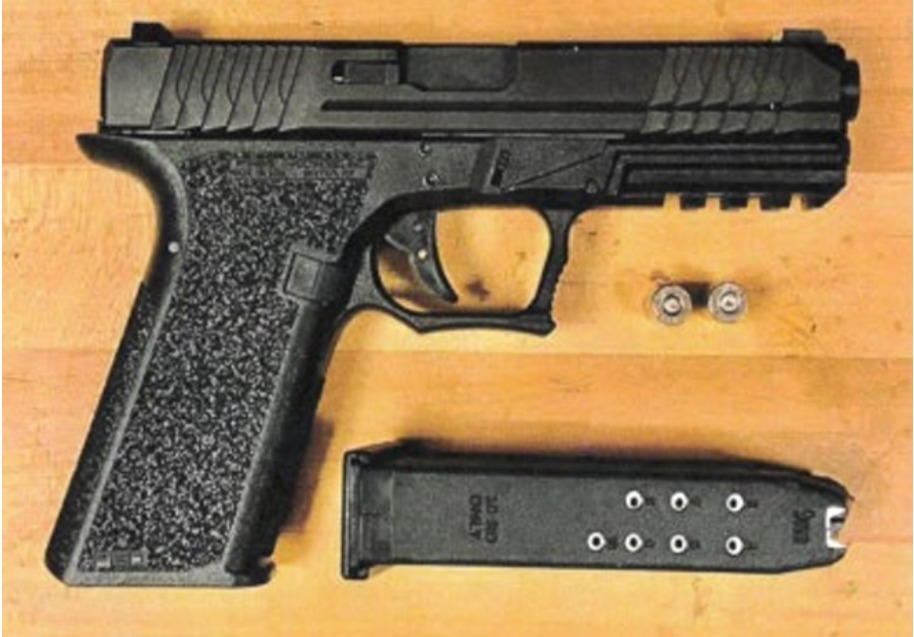
Source: Bondi v. VanDerStok, 604 U.S. 458, 469 (2025)